




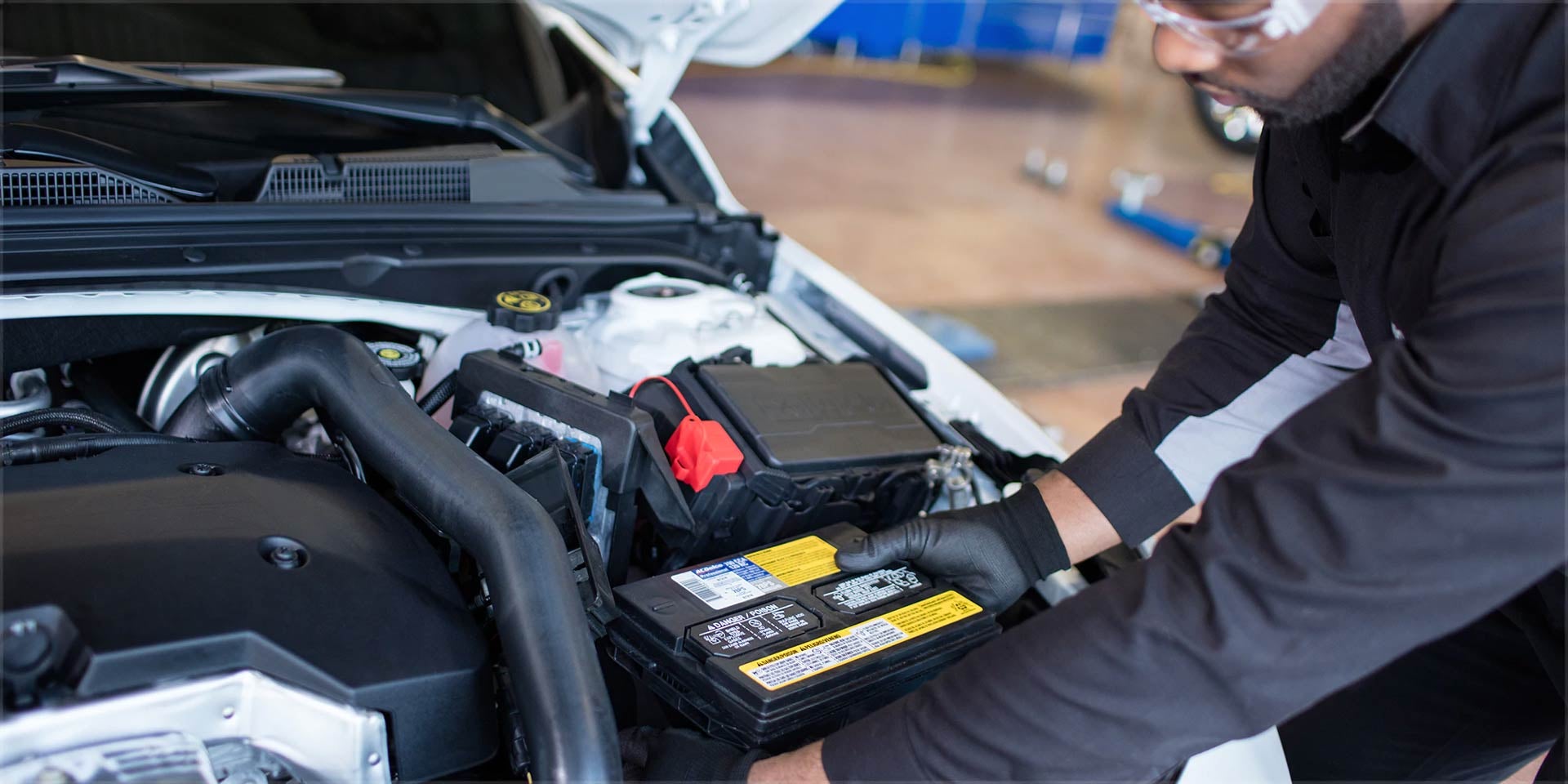
If your Chevrolet displays a "Service Battery Charging System" warning, the vehicle has detected a problem that may prevent its 12-volt battery from charging properly. Possible causes include a failing alternator, a weak or damaged battery, loose or corroded electrical connections, a drive belt problem, or a fault involving the vehicle's charging controls. This warning should not be ignored because the battery may eventually lose enough power to affect the vehicle's electrical systems or prevent the engine from restarting. For Chevy owners in Milledgeville, GA, understanding the difference between a battery problem and a charging system malfunction can help you recognize the warning signs and determine when professional diagnostics are necessary.
Schedule Chevrolet Electrical Diagnostics Explore Chevrolet Battery Service
What Does "Service Battery Charging System" Mean on a Chevy?
The "Service Battery Charging System" message means your Chevrolet has detected a fault involving its electrical charging system.
On gasoline and diesel Chevrolet vehicles, the charging system helps maintain the 12-volt battery's charge while supplying electrical power to vehicle components.
The system typically includes an alternator, battery, wiring, connections, electronic controls, and a drive belt.
When everything works properly, the engine-driven alternator generates electrical power and helps maintain an appropriate battery charge.
However, if a charging system component stops working correctly, the vehicle may begin relying more heavily on the battery's remaining stored energy.
As battery voltage drops, electrical features may become unavailable, and the vehicle may eventually stop operating.
For example, a Chevrolet Silverado traveling between Milledgeville and Sandersville might display the warning if the charging system detects an electrical malfunction.
The message does not automatically mean that the battery itself needs replacement.
A professional inspection can help determine whether the issue involves the alternator, battery, wiring, belt, or another component.
This article focuses on the conventional 12-volt charging systems used in gasoline- and diesel-powered Chevrolet vehicles. Chevrolet electric vehicles have additional high-voltage systems and different service requirements.
What Causes a Chevy Service Battery Charging System Warning?
Several different problems can prevent a Chevrolet's charging system from operating properly.
Potential causes include:
- Failing alternator: The alternator may not generate the electrical power required by the vehicle.
- Weak or damaged battery: A deteriorated battery may have difficulty accepting or maintaining a charge.
- Loose battery connections: Poor electrical contact can interfere with current flow.
- Corroded battery terminals: Corrosion may increase electrical resistance at the connections.
- Damaged serpentine belt: A worn, loose, or broken belt can prevent the alternator from operating correctly.
- Electrical wiring problems: Damaged cables, grounds, or connections can interrupt charging.
- Charging system sensor faults: Faulty monitoring components may provide incorrect information.
- Electronic control problems: Certain faults involving charging system management can trigger warnings.
These problems can produce similar dashboard messages, which is why diagnostic testing is important before replacing components.
1. A Failing Alternator
The alternator is one of the primary components responsible for generating electrical power in most gasoline- and diesel-powered Chevrolet vehicles.
When the engine is running, the alternator converts mechanical energy into electrical energy.
That power helps support the vehicle's electrical systems and maintain the battery's charge.
If the alternator cannot provide the required electrical output, the battery may begin supplying power that the charging system would normally provide.
What Are the Signs of a Bad Chevy Alternator?
Possible symptoms include:
- A Service Battery Charging System message.
- An illuminated battery-shaped dashboard warning.
- Headlights that become dim or behave abnormally.
- Electrical accessories that begin operating inconsistently.
- A battery that repeatedly becomes discharged.
- Difficulty restarting after the vehicle has been driven.
- Multiple electronic warnings appearing as voltage drops.
For example, a Chevrolet Traverse used for daily travel around Milledgeville may start normally but later display a charging warning while driving.
If the alternator is failing, the battery may not receive enough charge to support continued vehicle operation.
However, these symptoms do not prove that the alternator needs replacement.
A damaged belt, wiring problem, or control-system fault can produce similar results.
Can an Alternator Fail While You're Driving?
Yes. An alternator can stop charging while the engine is running.
Depending on the vehicle, the battery may temporarily supply electrical power, but that reserve is limited.
The vehicle may eventually experience electrical malfunctions, reduced functionality, or an engine shutdown.
For drivers on Highway 441 or other roads around Baldwin County, a charging warning should be treated as a reason to find a safe stopping location and arrange service rather than continue a long trip.
2. A Weak or Damaged Chevrolet Battery
The vehicle battery stores electrical energy used for starting the engine and supporting vehicle electronics.
Although the charging system helps replenish that energy, batteries gradually deteriorate over time.
Chevrolet explains that battery life depends on factors such as driving habits, climate, and maintenance.
Infrequent driving, repeated short trips, excessive discharge, and high temperatures can contribute to battery wear.
How Can You Tell Whether Your Chevy Battery Is Weak?
Some warning signs include:
- Slow engine cranking.
- Clicking or difficulty starting.
- Dim interior lights.
- A battery that repeatedly needs charging.
- Visible battery case damage or leakage.
- Electrical accessories behaving unexpectedly.
For example, a Chevrolet Equinox used primarily for short trips around Eatonton may not always receive enough driving time to replenish the energy used during starting, depending on its operating conditions.
Over time, this can contribute to a low battery state of charge.
However, a battery that repeatedly loses charge may also indicate a malfunctioning alternator or an electrical component drawing power when the vehicle is parked.
Does Service Battery Charging System Always Mean the Battery Is Bad?
No. The warning identifies a charging-system concern, not necessarily a defective battery.
Installing a new battery will not correct a malfunctioning alternator, loose electrical connection, or damaged drive belt.
Likewise, replacing an alternator may not resolve a problem caused by a damaged battery cable or charging control fault.
At Childre Chevrolet's Battery Service Center, our Certified Service team can evaluate battery condition and help identify concerns that require additional electrical diagnostics.
3. Loose or Corroded Battery Connections
A battery depends on secure electrical connections to deliver power and receive charging current.
If the terminals become loose or heavily corroded, electrical resistance can increase.
This may interfere with normal electrical operation.
Depending on the severity of the problem, a Chevrolet may experience starting difficulties, intermittent electronic warnings, or charging-related symptoms.
What Does Battery Terminal Corrosion Look Like?
Corrosion may appear as a white, bluish, or greenish buildup around battery terminals and connections.
It can develop because of battery-related chemical reactions, moisture, and environmental exposure.
For drivers in Central Georgia, regular battery inspections are useful because hot weather and ordinary battery aging can contribute to electrical system concerns.
Can You Inspect the Battery Connections Yourself?
On a conventional gasoline- or diesel-powered Chevrolet, you may be able to visually inspect accessible battery connections while the vehicle is turned off.
Look for obvious corrosion, damaged cables, or visible battery case problems.
However, battery locations and electrical service procedures vary by model.
Do not disconnect battery cables while the engine is running.
Also, avoid attempting to clean or handle a swollen, cracked, or leaking battery.
Battery electrolyte can cause serious injuries, and charging batteries may release flammable gases.
If you are uncertain about the correct procedure, have the battery inspected professionally.
4. A Worn or Broken Serpentine Belt
On many Chevrolet engines, the alternator is driven by a belt connected to the engine's rotating components.
If the belt slips, becomes damaged, or breaks, it may no longer drive the alternator correctly.
As a result, the charging system may not generate the required electrical power.
Signs of a Possible Belt Problem
- A charging-system warning appears.
- An unusual squealing or chirping noise develops.
- The belt has visible cracking, fraying, or damage.
- Charging performance changes with engine operation.
- Additional engine-system warnings appear.
For example, an older Chevrolet Silverado with a damaged accessory drive belt may develop a charging problem even when its battery is otherwise functional.
On some engines, the same belt also operates other important accessories, so a belt failure can create additional problems.
Drivers should not continue normal driving with a suspected broken belt.
Never reach near belts, pulleys, fans, or other moving engine components while the engine is running.
Professional inspection can determine whether the belt, tensioner, pulley, or another component requires attention.
5. Wiring, Ground Connections, and Charging System Sensors
Modern Chevrolet electrical systems rely on properly functioning wiring, grounds, sensors, and electronic controls.
Depending on the model, the vehicle may monitor battery current, battery temperature, system voltage, and other charging conditions.
These systems can adjust charging behavior according to the vehicle's electrical needs.
If a connection is damaged or a sensor provides incorrect information, charging performance may be affected.
Can a Bad Ground Connection Cause Charging Problems?
Yes. An electrical ground provides a return path for current flowing through the vehicle's circuits.
If a ground cable becomes loose, damaged, or excessively corroded, electrical systems may behave unpredictably.
For example, a Chevrolet Tahoe may experience intermittent electrical warnings because of an issue involving a power or ground connection.
However, the symptoms alone cannot identify the responsible cable.
Electrical testing may be necessary to determine where excessive resistance or an interruption exists.
Can a Battery Sensor Cause the Warning?
Certain Chevrolet vehicles use battery monitoring sensors to help manage electrical charging.
A sensor or related wiring fault may interfere with accurate charging-system information.
However, sensor replacement should follow the appropriate diagnostic procedures.
Not every Chevrolet uses the same battery sensor design or charging control strategy.
Service Battery Charging System vs. Battery Saver Active: What's the Difference?
Chevrolet vehicles may display several battery-related messages, but they do not all describe the same condition.
Understanding the exact wording can help you explain the problem when scheduling service.
| Dashboard Message or Symptom | What It May Mean | Recommended Action |
|---|---|---|
| Service Battery Charging System | A charging-system malfunction has been detected. | Arrange prompt electrical system diagnostics. |
| Battery Saver Active | Battery voltage is low enough that the vehicle may reduce certain electrical loads. | Reduce unnecessary electrical use and investigate persistent warnings. |
| Low Battery | The battery's state of charge or voltage may be below the expected level. | Have battery condition and charging performance checked. |
| Battery-Shaped Warning Light While Driving | The vehicle may have an electrical charging problem. | Find a safe stopping place and arrange service. |
| Slow Cranking or Clicking | The battery may be discharged, weak, or unable to supply sufficient starting power. | Test the battery and starting/charging systems. |
| Repeatedly Dead Battery | Possible battery deterioration, charging fault, or electrical drain. | Request a complete battery and electrical inspection. |
Dashboard messages and their specific meanings vary by Chevrolet model and model year. Always consult your vehicle's owner's manual.
What Does Battery Saver Active Mean?
On applicable Chevrolet vehicles, the Battery Saver Active message can appear when the vehicle detects low battery voltage and begins reducing certain electrical loads.
For example, some comfort or convenience features may temporarily operate differently while the vehicle attempts to conserve electrical power.
Although the message may be associated with a discharged battery, it can also appear when an underlying charging problem prevents the battery from maintaining its charge.
If it appears repeatedly, professional inspection is recommended.
What Does the Battery Warning Light Mean?
Chevrolet explains that a battery-shaped charging-system light normally illuminates briefly during vehicle startup.
However, if the light remains illuminated or appears while driving, it may indicate an electrical charging-system problem.
Continuing to drive may drain the 12-volt battery.
If you must travel a very short distance to reach a safe location, Chevrolet advises switching off unnecessary electrical accessories.
Do not assume a particular driving distance is safe, because the remaining battery capacity is unknown.
What Happens if Your Chevy Alternator Stops Charging While Driving?
If the alternator stops providing adequate electrical power, the battery may temporarily supply the electricity needed by the vehicle's systems.
However, the battery contains a limited amount of stored energy.
As its charge decreases, electronic components may begin operating abnormally.
Possible consequences include:
- Dimming lights.
- Electrical accessories becoming unavailable.
- Multiple dashboard warnings.
- Reduced system functionality.
- Difficulty restarting the engine.
- Possible engine shutdown or loss of electrical assistance, depending on the vehicle.
For example, a Chevrolet Traverse traveling along Highway 441 toward Milledgeville could experience a charging-system fault while the engine is running.
Even if the vehicle initially continues driving, the available battery power may decrease until normal operation is no longer possible.
That is why a charging-system warning should be addressed promptly rather than ignored until the vehicle refuses to start.
Can You Drive With Service Battery Charging System On?
Continuing to drive with a charging-system warning can be risky because the vehicle may lose electrical power and stop operating.
Chevrolet recommends service when the charging-system warning light remains on or appears while driving.
If the warning appears while traveling, remain calm and move toward a safe place to stop.
Depending on the vehicle's condition, this may mean reaching a nearby parking area or safely leaving a busy roadway.
If you must drive a short distance to reach safety, reduce unnecessary electrical loads when practical.
What Should You Do When the Warning Appears?
- Pay attention to the exact message and any additional warning lights.
- Avoid starting a long trip or continuing normal highway driving.
- Find a safe location to stop.
- Switch off nonessential electrical accessories if doing so is safe.
- Watch for abnormal steering, lighting, engine, or electrical behavior.
- Follow your specific Chevrolet owner's manual.
- Arrange professional service or towing when appropriate.
If the vehicle loses power, displays serious additional warnings, or becomes difficult to control, stop safely and request assistance.
Do not attempt to keep driving simply because the engine has not yet shut off.
Will Replacing the Battery Fix Service Battery Charging System?
Sometimes a battery replacement is necessary, but it will not resolve every charging-system fault.
If the alternator is failing, the new battery may discharge because the vehicle still cannot recharge it properly.
Similarly, a damaged charging cable or poor ground connection may continue interfering with electrical operation after a battery replacement.
For example, a Chevrolet Equinox that repeatedly needs a jump-start may have a deteriorated battery.
However, if the charging system is not functioning correctly, replacing the battery alone could leave the problem unresolved.
Before replacing parts, a technician can evaluate the battery's health and the vehicle's ability to charge it.
What if the Warning Appears After Installing a New Battery?
If your Chevy displays Service Battery Charging System after a battery replacement, there may still be an unresolved charging or electrical problem.
Possible explanations include:
- A charging-system fault that existed before the battery replacement.
- A loose or improperly connected battery cable.
- A battery that does not meet the vehicle's specifications.
- A damaged battery monitoring component.
- A separate alternator, wiring, or control-system problem.
The vehicle may also require model-specific procedures after certain battery or electrical system repairs.
However, a new battery does not automatically require replacement or electronic recalibration simply because a warning is present.
The correct next step is to inspect the applicable charging-system components and diagnostic information.
Why Does My Chevy's Battery Keep Dying?
A Chevrolet battery that repeatedly becomes discharged may have one of several underlying problems.
A deteriorated battery may no longer hold enough energy to start the engine reliably.
Alternatively, the alternator may not be replenishing the battery during normal driving.
Another possibility is an electrical component continuing to draw excessive power while the vehicle is parked.
What Is a Parasitic Battery Drain?
A parasitic electrical drain occurs when a vehicle continues using more battery power than expected while parked and turned off.
Some electrical activity is normal because modern vehicles maintain functions such as security systems, memory settings, and electronic modules.
However, a malfunctioning accessory, module, or wiring circuit can sometimes use excessive power.
For example, a Chevrolet Silverado that repeatedly has a dead battery after sitting overnight may need more than a simple battery replacement.
A technician can test the battery, charging system, and electrical draw to determine the source of the problem.
Can Cold Weather Cause Chevrolet Battery Problems?
Yes. Colder weather can affect a battery's ability to provide starting power, particularly when the battery is already weak or partially discharged.
Although Central Georgia generally experiences milder winters than many northern regions, colder mornings can still expose a deteriorating battery.
For example, a Chevrolet Malibu parked overnight in Sparta may crank more slowly during a cold morning.
However, a battery that struggles during cold weather does not automatically mean the alternator has failed.
The battery may simply need testing, or another starting-system component may be responsible.
What About Georgia's Summer Heat?
Heat can also affect battery health.
Chevrolet explains that warmer climates may contribute to battery deterioration, reducing battery life over time.
For vehicles used around Milledgeville, Eatonton, and Macon, regular battery inspections can help identify signs of deterioration before a no-start condition develops.
Can You Test a Chevy Battery at Home?
Some basic observations can help you recognize battery-related problems, but they cannot identify every charging-system fault.
For example, slow cranking may indicate insufficient starting power, while visibly corroded terminals may suggest a connection problem.
A voltage measurement can also provide useful information, but modern Chevrolet charging systems may intentionally vary charging voltage according to operating conditions.
Therefore, one voltage reading alone is not enough to determine whether a battery, alternator, or charging control system is defective.
Professional testing may include battery conductance testing, starting-system evaluation, charging output measurements, and diagnostic trouble code analysis.
Should You Disconnect the Battery While the Engine Is Running?
No. Never disconnect the battery while the engine is running to test the alternator.
Chevrolet specifically warns against disconnecting battery cables during engine operation.
Doing so can create electrical hazards and potentially damage sensitive vehicle electronics.
Similarly, do not attempt to bypass charging-system components or handle moving belts and pulleys.
If you suspect an alternator fault, have the system tested using proper diagnostic equipment.
How Do Chevrolet Technicians Diagnose Charging System Problems?
Accurate diagnostics help distinguish between battery deterioration, charging-system faults, and other electrical problems.
Depending on the vehicle and symptoms, testing may include:
Battery Health Testing
A technician may use a conductance tester or other appropriate equipment to evaluate the battery's condition.
This helps determine whether the battery can provide the required starting power and maintain an acceptable charge.
Alternator and Charging Output Testing
The charging system can be evaluated under the appropriate conditions to determine whether it is generating and regulating electrical power correctly.
Technicians must account for the vehicle's electronic charging strategy rather than relying on a single universal voltage value.
Battery Terminal and Cable Inspection
Electrical connections may be checked for looseness, corrosion, damage, or excessive resistance.
Serpentine Belt Inspection
On applicable vehicles, technicians may inspect the drive belt, tensioner, and pulleys for problems affecting alternator operation.
Diagnostic Trouble Code Review
Stored or active trouble codes may provide information about charging system controls, voltage conditions, or communication faults.
Battery Drain Testing
When a battery repeatedly loses charge while the vehicle is parked, technicians may check for excessive electrical draw.
At Childre Chevrolet's Certified Service Department, our team can investigate starting, battery, and charging-system concerns and recommend the appropriate repair based on diagnostic findings.
How Can You Help Maintain Your Chevy's Battery?
Routine battery inspections can help identify wear and electrical connection problems before they result in a no-start condition.
Chevrolet recommends periodic battery inspection and testing as part of vehicle maintenance.
Helpful maintenance practices include:
- Have the battery inspected periodically.
- Check for visible corrosion, cracks, or leakage.
- Keep unnecessary accessories from draining the battery while parked.
- Follow the manufacturer's recommendations for vehicles used infrequently.
- Use a compatible battery type when replacement is needed.
- Address repeated slow-cranking or no-start symptoms.
- Have persistent dashboard charging warnings diagnosed.
Childre Chevrolet offers Certified Chevrolet Battery Service, including battery condition testing.
Battery inspections may also be included during routine maintenance visits.
For drivers who frequently travel between Milledgeville, Eatonton, and Macon, checking battery condition before a longer trip can help identify potential problems.
However, routine maintenance cannot prevent every unexpected electrical failure.
When Should You Schedule Chevrolet Battery or Alternator Service?
Schedule an inspection if your Chevrolet experiences any of the following:
- A persistent Service Battery Charging System warning.
- A battery-shaped warning light while driving.
- Repeated Battery Saver Active messages.
- Slow engine cranking or difficulty starting.
- A battery that repeatedly loses charge.
- Dimming or flickering lights.
- Electrical accessories operating abnormally.
- Unusual belt noises with charging symptoms.
- Multiple electronic warnings appearing together.
If the charging warning appears while driving, do not delay seeking assistance.
A vehicle with an active charging-system failure may not have enough remaining electrical power to reach the dealership safely.
When necessary, arrange roadside assistance or towing rather than continuing to drive.
Frequently Asked Questions About Chevy Charging System Warnings
What does Service Battery Charging System mean on my Chevy?
It means the vehicle has detected a problem involving its electrical charging system. Possible causes include an alternator malfunction, battery problem, damaged wiring, or an issue with charging controls. Professional diagnostics can determine the cause.
Does Service Battery Charging System mean my alternator is bad?
Not necessarily. A failing alternator is one possible cause, but the warning can also involve battery condition, wiring, terminals, belt operation, or electronic controls. Testing should identify the actual problem before parts are replaced.
Can a bad battery cause a Service Battery Charging System warning?
Yes. Certain battery faults can contribute to charging-system problems. However, a weak battery may also be the result of an alternator or wiring problem. Both the battery and charging system should be evaluated.
Can I drive with the Service Battery Charging System warning?
Continuing to drive can be risky because the vehicle may eventually lose electrical power. Find a safe stopping location, follow your Chevrolet owner's manual, and arrange prompt service or towing if necessary.
How long will my Chevy run with a bad alternator?
There is no reliable universal time or distance. Remaining operating time depends on battery condition, electrical demand, and the vehicle's systems. The engine may stop or electrical functions may become unavailable without much warning.
What does Battery Saver Active mean on a Chevy?
On applicable Chevrolet models, Battery Saver Active indicates that battery voltage has fallen enough for the vehicle to begin reducing certain electrical loads. Persistent or recurring messages should be investigated because they may indicate a weak battery or charging problem.
Why does my Chevy battery keep dying even though it is new?
A new battery can still become discharged if the alternator is not charging properly, a connection is faulty, or an electrical component is drawing excessive power while the vehicle is parked. Diagnostic testing can help identify the underlying problem.
Can a bad serpentine belt cause a charging-system warning?
Yes. On engines where the belt drives the alternator, a worn, slipping, or broken belt can interfere with electrical charging. The belt and related components should be inspected when a belt problem is suspected.
Why does the battery light come on while driving?
A battery-shaped charging-system warning that appears while driving can indicate an electrical charging malfunction. Chevrolet recommends getting the vehicle serviced because continuing to drive can drain the battery.
Can I jump-start my Chevy if the alternator is bad?
A jump-start may temporarily start a vehicle with a discharged battery, but it does not repair a faulty alternator. The vehicle may stop operating again if the charging system cannot provide sufficient electrical power. Follow your owner's manual and arrange professional assistance.
Why did the warning come back after replacing the battery?
The underlying problem may involve an alternator, electrical connection, charging sensor, or another component. Replacing a battery will not correct those faults. Have the charging system inspected rather than replacing additional parts without testing.
Can Childre Chevrolet test my battery and charging system?
Yes. Childre Chevrolet provides Certified Chevrolet Battery Service and general vehicle maintenance and repair. Our service team can evaluate battery condition and investigate charging-related symptoms to determine which components require attention.
Schedule Chevrolet Battery and Charging System Diagnostics in Milledgeville, GA
A Service Battery Charging System warning may indicate a failing alternator, weak battery, damaged electrical connection, drive belt problem, or another charging-system malfunction.
Because several different problems can produce the same warning, professional diagnostics are important before replacing parts.
At Childre Chevrolet, our Certified Service team can help investigate battery, alternator, and electrical system concerns.
Located at 2710 North Columbia Street in Milledgeville, GA, we welcome Chevrolet owners from Eatonton, Sparta, Macon, Sandersville, and surrounding Central Georgia communities.
Whether your Silverado displays Service Battery Charging System, your Equinox repeatedly loses battery power, or your Traverse struggles to start, our team can help determine the appropriate next steps.
Visit our Chevrolet Battery Service page to learn more about battery maintenance, or browse our current service and parts specials for applicable offers.
If a charging warning is active and the vehicle may not be safe to drive, arrange assistance rather than attempting to reach the dealership without sufficient electrical power.
Schedule Chevrolet Electrical Service Explore Battery Service
This article provides general information about conventional Chevrolet 12-volt batteries and electrical charging systems. Warning messages, charging components, diagnostic procedures, and service requirements vary by model and year. Electric and hybrid vehicles may have different systems and safety requirements. Do not disconnect battery cables while the engine is running or handle damaged batteries without appropriate precautions. If your vehicle develops an active charging-system fault, unsafe electrical behavior, or difficulty remaining operational, stop safely and arrange professional assistance.